Beyond the Surface: Organising Desk Drawers, Shelves and Everything You Can't See
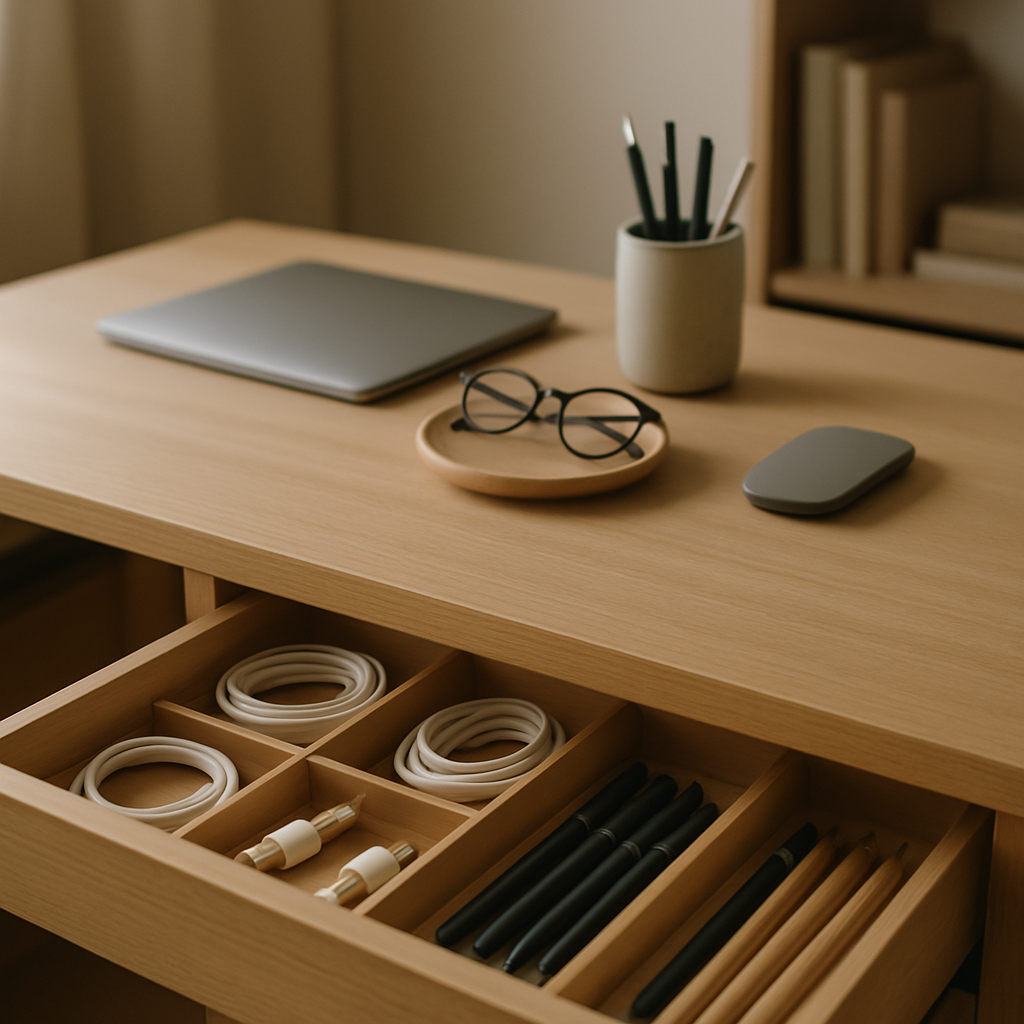
Desk setup photography has a dirty secret: the drawer. Beneath many of those pristine, minimalist surfaces lies a chaos of tangled cables, dead batteries, mystery adapters and pens that stopped working during a previous government. The visible desk gets all the attention, but the hidden storage around it determines whether your workspace actually functions — whether you can find the right cable in ten seconds or ten minutes. Here is how to bring the invisible parts of your setup up to the standard of the visible ones.
Why Hidden Clutter Still Costs You
It is tempting to think that out of sight is problem solved. But disorganised storage exacts a steady tax. Every search for a charger interrupts your focus. Duplicate purchases pile up because you cannot find what you already own. And a drawer you dread opening quietly becomes a drawer you stop using, pushing clutter back onto the desk surface it was meant to protect.
There is a psychological angle too. Researchers studying workspace clutter have repeatedly linked visual chaos to elevated stress and reduced ability to focus — and anyone who has opened a junk drawer while already stressed knows the effect does not require the clutter to be permanently visible. Order you can rely on, even hidden order, makes the whole workspace feel more trustworthy.
The Purge Comes Before the Products
The universal mistake is buying organisers first. Drawer trays and dividers only shuffle chaos into compartments unless you reduce what you own to what you use.
Empty everything — drawers, shelves, the box of cables in the cupboard — onto one surface. Then sort with honest questions. Cables: keep one spare of each type you actively use; recycle the rest, including everything proprietary to devices you no longer own. Pens: test them; a working pen is a tool, a dead pen is litter. Old tech, dead batteries, manuals for products you could look up online, promotional USB sticks of mysterious provenance — out, via your local electronics recycling.
Most people discover that half of what they stored deserves to leave. What remains is a set of genuinely useful items small enough to organise properly.
Give Every Category a Home
With the inventory trimmed, organisation becomes simple: one category, one place, always.
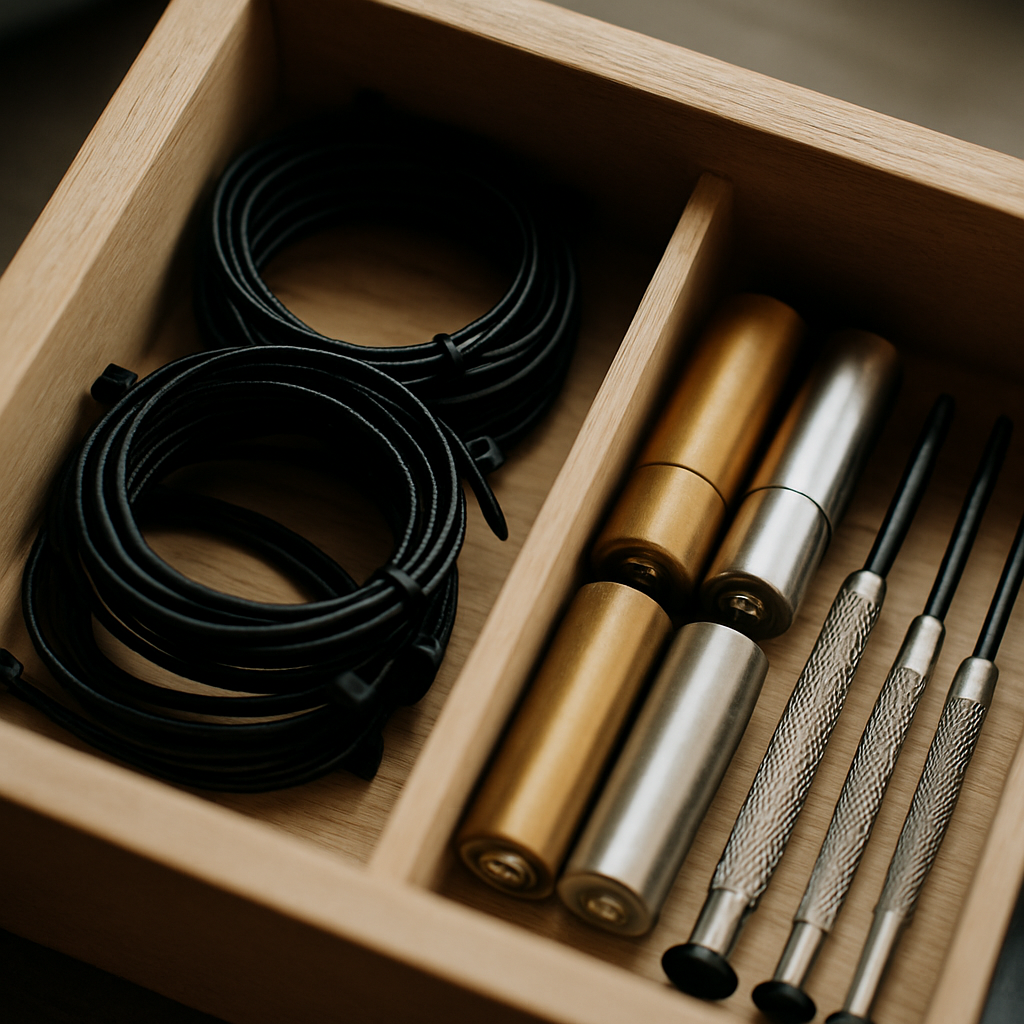
For drawers, shallow trays and adjustable dividers work best when you resist over-slicing — a compartment for pens, one for notepads and sticky notes, one for small tools, one for chargers. Cables deserve special treatment: coiled loosely (tight wrapping damages them over time) and secured with Velcro ties, then stored individually. Small zip pouches or even labelled sandwich bags prevent the spontaneous re-tangling that cables perform when stored together in the dark.
Shelves near the desk hold the middle tier — things used weekly, not daily. Magazine files, small boxes and baskets keep categories together and make dusting possible. Label anything opaque; the point of a system is retrieving things without thinking, and unlabelled boxes reintroduce thinking.
Reserve the least accessible storage for the least-used items: the backup drive you touch quarterly, the spare keyboard, seasonal equipment. Depth of storage should mirror frequency of use.
The Desk's Supporting Cast
A few purpose-built pieces punch above their weight. An under-desk drawer that clamps or screws beneath the desktop adds hidden storage to desks that have none, perfect for the daily-use small items that otherwise colonise the surface. A rolling drawer unit tucked under one end of the desk offers three or four drawers of capacity while staying invisible in most room layouts. Headphone hooks, under-shelf baskets and monitor stands with built-in trays each recover a little space that clutter would claim.
One warning from experience: every new storage container is also an invitation to keep more stuff. Add capacity only after the purge, and only for categories that genuinely overflow.
Maintenance in Minutes, Not Weekends
Systems decay without upkeep, but the upkeep is small if the design is right. A two-minute reset at the end of each day — items back to their homes, surface cleared — prevents the slow drift back to chaos. A quarterly fifteen-minute review of one drawer or shelf catches the accumulating strays before they become an archaeology project.
The most useful habit of all is the one-in, one-out rule for equipment. New mouse arrives, old mouse leaves — to a friend, a charity shop or recycling, not to the drawer of forgotten peripherals.
Order You Can Feel
A well-organised workspace is not really about tidiness for its own sake. It is about removing tiny frictions from a hundred daily moments: the cable found instantly, the pen that works first time, the drawer that opens onto calm instead of chaos. The surfaces in your setup photos may earn the compliments, but the hidden order underneath is what makes a desk genuinely pleasant to work at, day after ordinary day.