Choosing a Desk Surface: Solid Wood, Laminate, Bamboo and Beyond
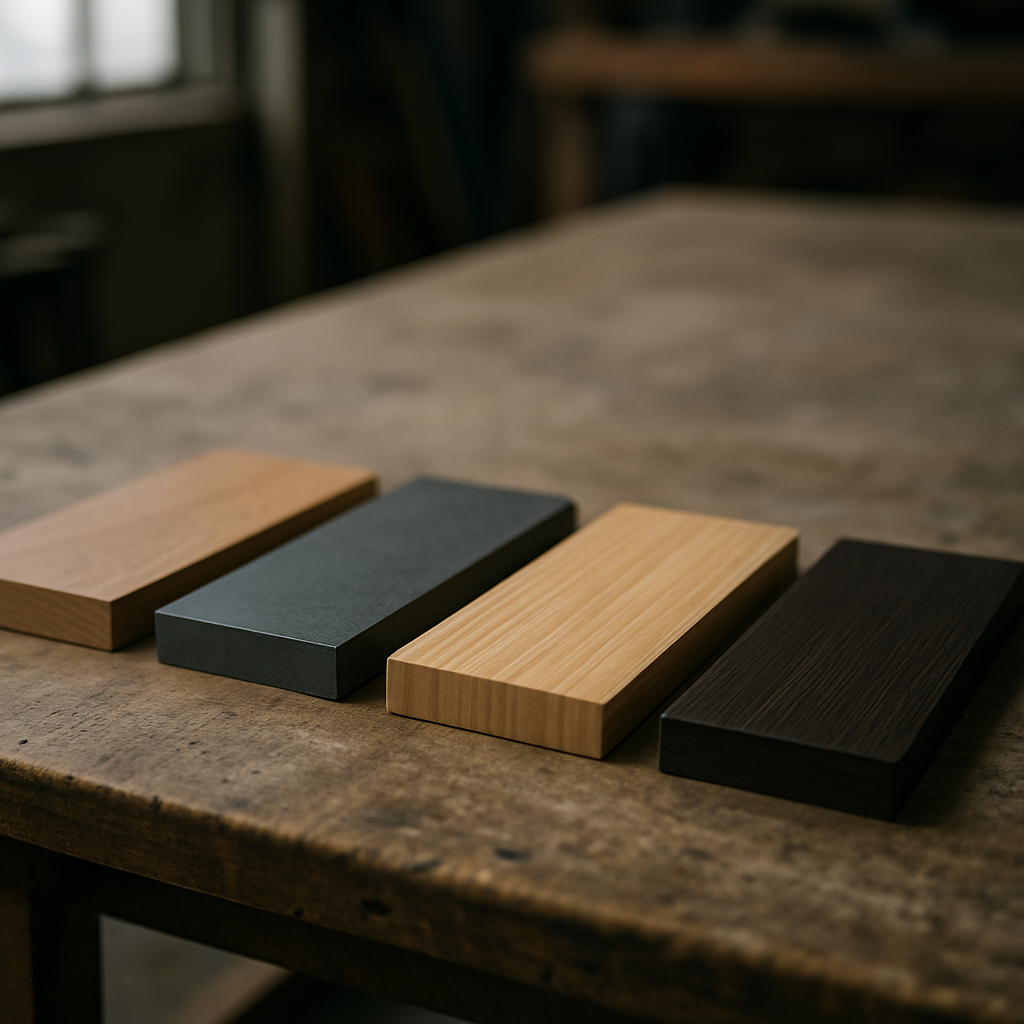
When people plan a desk setup, they obsess over monitors, chairs and keyboards, then buy whatever desk happens to be on sale. It is an odd blind spot, because the desktop itself determines how your workspace looks, feels and ages more than almost any other component. The material under your forearms affects everything from mouse tracking to how the whole room photographs. Here is an honest look at the main options and who each one suits.
Laminate and MDF: The Practical Default
The vast majority of affordable desks are MDF or particleboard wrapped in a laminate skin, and honestly, modern laminate deserves more respect than it gets. It resists coffee rings, wipes clean in seconds, never needs oiling, and shrugs off the daily abrasion of a mouse and keyboard. Textured woodgrain laminates from reputable manufacturers can look convincingly natural from a metre away.
The weaknesses show up over years rather than months. Once the laminate edge chips or the surface swells from moisture getting into the core, there is no repairing it. Cheap boards can also sag under the weight of dual monitors on a heavy arm mount, so check the board thickness — 25 millimetres is a sensible minimum for spans over 140 centimetres.
Choose laminate if you want maximum durability per pound spent, or if your desk lives somewhere it will take abuse.
Solid Wood: Beautiful, Repairable, Demanding
A solid hardwood top — oak, ash, walnut or beech — is the choice for people who see their desk as furniture rather than equipment. Nothing else has the same depth of grain, the warm feel under your wrists, or the way it develops character over a decade.
The magic of solid wood is repairability. Scratches, dents and water marks can be sanded out and the surface re-oiled, essentially resetting the desk to new. That is something no laminate can offer.
The trade-offs are real, though. Solid wood moves with humidity, so it needs proper mounting hardware that allows seasonal expansion. It wants re-oiling once or twice a year. And genuine hardwood in desk-sized slabs is expensive — often more than an entire budget desk setup.
A worthwhile middle path is a solid wood veneer over plywood: much of the look, better dimensional stability, lower cost.
Bamboo: The Standing Desk Favourite
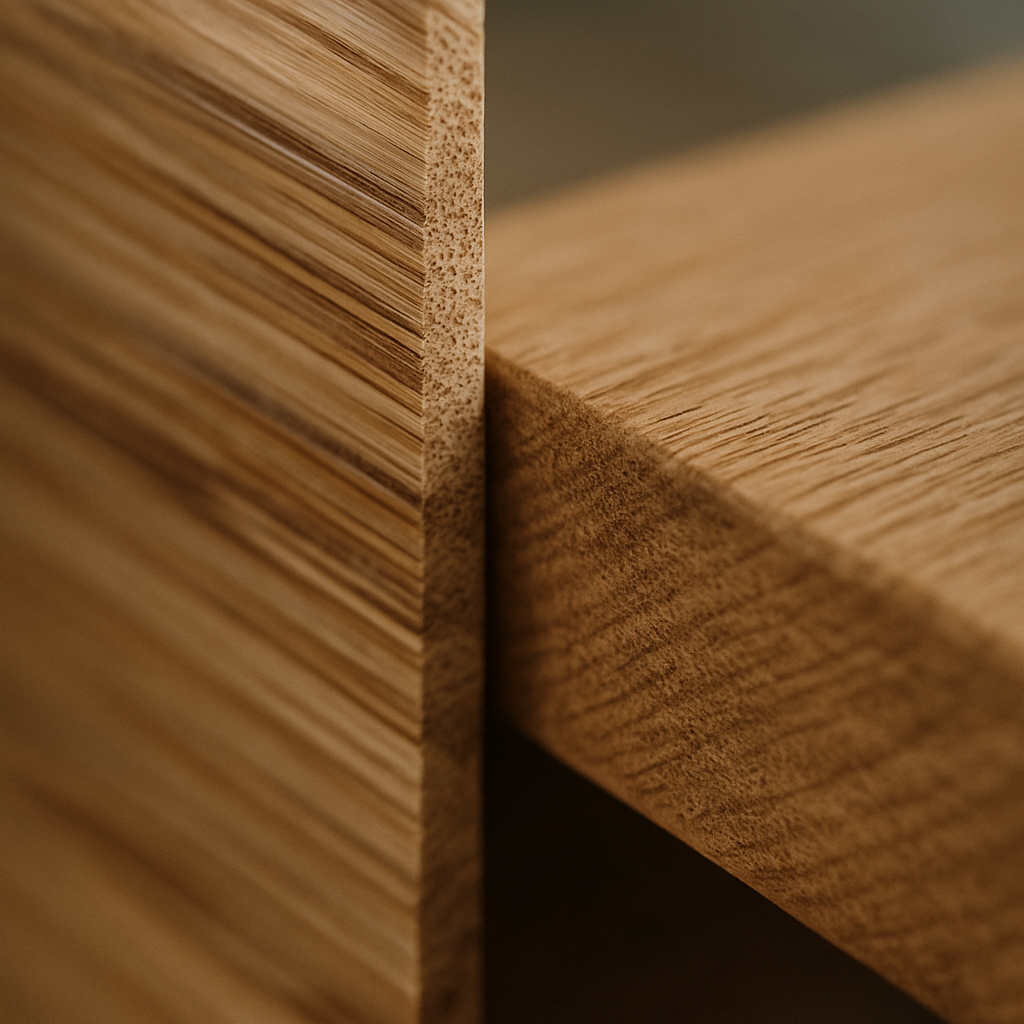
Bamboo tops have become the signature surface of the sit-stand desk era, and they earn their popularity. Technically a grass, bamboo is pressed into boards that are harder than many hardwoods, dimensionally stable, and lighter than oak — which matters when a motorised frame is lifting the whole thing sixty times a week.
Bamboo's pale, uniform grain suits the clean Scandinavian-influenced aesthetic that dominates desk setup culture. It takes oil finishes nicely and resists warping. The main criticisms are cosmetic: some people find the repeating strip pattern monotonous compared to real timber, and the colour range is narrow unless you go for carbonised (darker) boards.
If you are buying a standing desk and want something a step above laminate without hardwood prices, bamboo is the sensible answer.
Glass, Steel and Other Statement Surfaces
Tempered glass desks photograph beautifully and wipe perfectly clean, but living with one is another matter. Every fingerprint shows, optical mice struggle without a mat, and everything you place on glass sounds like a small percussion instrument. They suit sparse, decorative setups more than heavy daily work.
Powder-coated steel and linoleum-topped desks occupy interesting niches. Linoleum (the genuine material, not vinyl) has a soft, matte, slightly warm feel that designers love, and it is quietly becoming a favourite in high-end European office furniture. It scratches more easily than laminate but feels wonderful under bare forearms.
Protecting Whatever You Choose
Whatever surface you land on, a large desk mat solves most practical problems at once. It protects the finish from micro-scratches, gives your mouse a consistent tracking surface, dampens keyboard sound, and adds a colour anchor to the whole setup. Felt, leather and stitched fabric mats each bring a different character.
For hot drinks, use a coaster on anything oiled or wooden — a single forgotten mug can leave a white ring that takes real effort to remove. And if you mount monitor arms, use the reinforcement plate that comes with the clamp, especially on laminate boards.
The Bottom Line
There is no single best desk surface, only the best one for how you actually work. Laminate for durability and value, bamboo for standing desks with style, solid wood for a workspace you intend to keep for twenty years, and the statement materials for setups where looks lead. Whichever you choose, buy the largest surface your room allows. Nobody has ever complained about having too much desk.