DIY Desk Builds and IKEA Hacks: Custom Workspaces Without Custom Prices
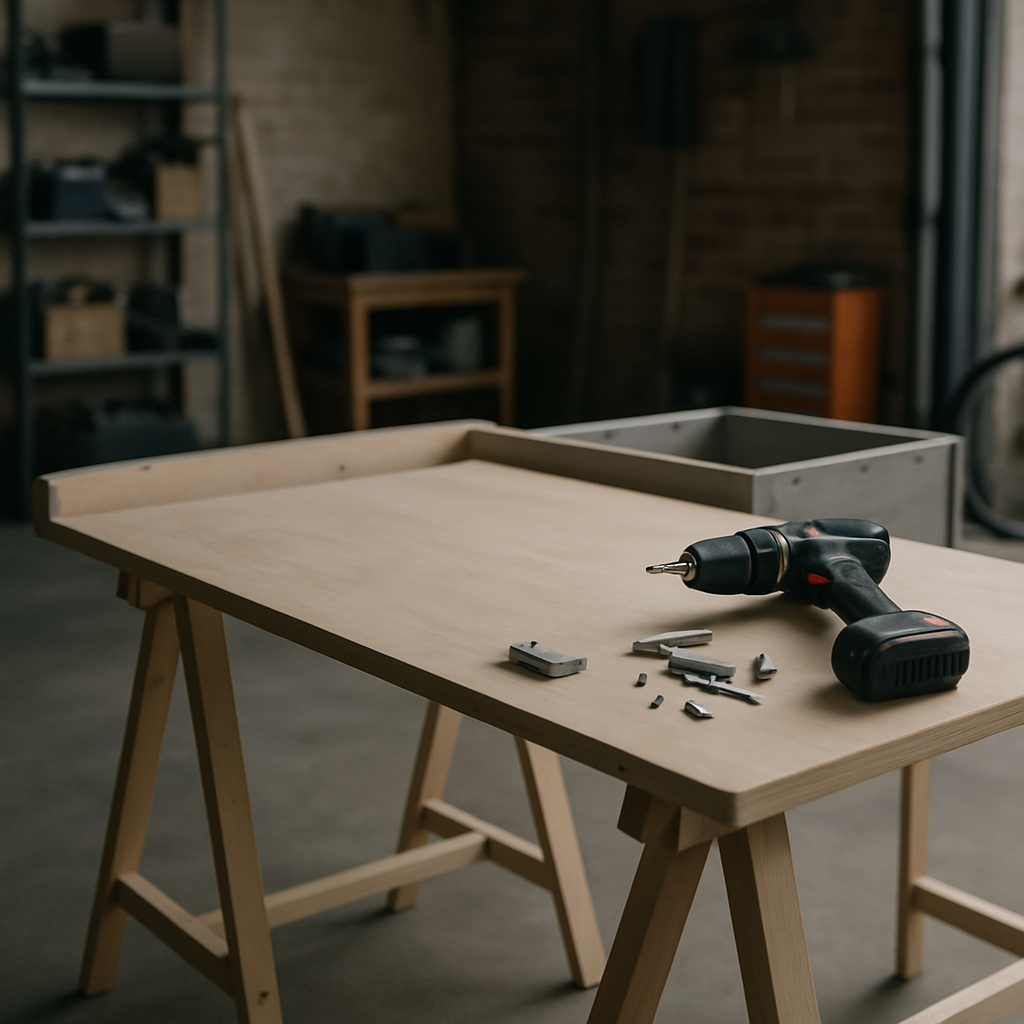
Somewhere between buying a flat-pack desk and commissioning bespoke furniture lies one of the most satisfying corners of desk setup culture: building your own. The DIY desk scene has produced some of the most distinctive workspaces on the internet, and the entry barrier is far lower than it looks. You do not need a workshop, and in many cases you barely need tools. Here is how people are building custom desks on ordinary budgets — and the lessons learned from thousands who have done it before.
The Classic: Countertop Plus Legs
The foundational DIY desk formula is beautifully simple: buy a kitchen countertop or tabletop slab, attach legs or trestles, done. IKEA built half the internet's desks this way — the KARLBY walnut-veneer countertop paired with ALEX drawer units became so common in setup photos that it is practically a genre of its own.
The formula's strength is choice at every layer. Tops range from budget laminate through butcher block to solid oak worktops from any kitchen supplier. Support can be simple steel legs, trestles, drawer units doing double duty as storage, or — the increasingly popular option — a motorised standing desk frame from the many companies that sell frames without tops.
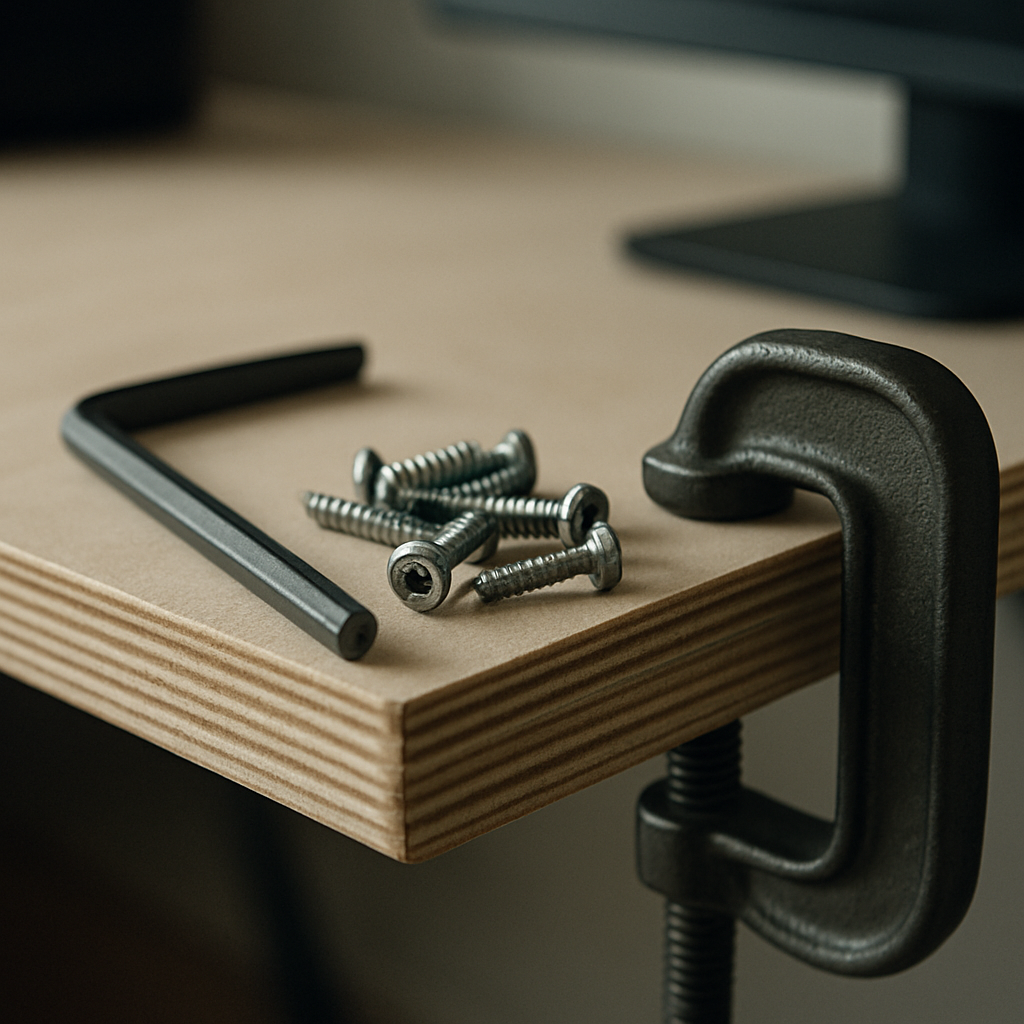
Practical wisdom from those who have gone before: check the top's thickness and core material before mounting anything (particleboard cores need special fixings and care with monitor arm clamps), seal any cut edges on kitchen worktops, and if you use drawer units as legs, anchor the top to them so the desk cannot shift.
Beyond the Countertop: Doors, Scaffold Boards and Live Edges
Once you see desks as a top plus support, materials appear everywhere. A solid-core door makes an enormous, rigid desktop for very little money. Reclaimed scaffold boards, sanded and oiled, produce a rugged industrial look and genuine solid-wood durability. Plywood — good quality birch ply with the edges left exposed — has become a design statement in its own right, warm and honest and much loved in studio spaces.
At the ambitious end sit live-edge slabs: single cuts of tree with the natural edge preserved. They cost more and demand flattening and finishing, but sawmills and woodworking shops will often do that work for a fee, leaving you only the pleasant tasks of oiling and mounting legs.
Whatever the material, one rule holds: a desktop must be flat and rigid across its span. Test any board over its intended length before committing — a subtle bow that seems trivial in the shop becomes a rolling pen and a wobbling monitor at home.
Small Hacks with Outsized Impact
Not every project needs to be a whole desk. Some of the best DIY workspace improvements are modest weekend jobs.
A wooden monitor shelf raises screens to eye height while creating storage underneath. An under-desk cable tray can be built from a curtain rail, a wire basket or two brackets and a plank. Pegboards — IKEA's SKÅDIS or a classic hardware-store panel — turn dead wall space into modular storage for headphones, cables and notebooks. A slim keyboard tray, a headphone hook made from a corner brace, a desk-side rail for charging devices: each one is an hour's work.
These small builds are also the best way to learn. Drilling into a cheap pine shelf teaches you everything you need to know before you take a drill anywhere near an expensive walnut worktop.
Finishing: The Step That Separates Good from Great
The difference between a DIY desk that looks homemade and one that looks bought from a design shop is almost always finishing. Sanding through progressively finer grits until the surface feels smooth under your palm, easing the edges so they do not bite your forearms, and applying a proper finish — hardwax oil is the DIY favourite, forgiving to apply and easy to repair — transforms raw wood into furniture.
Budget time for this. The building takes an afternoon; the finishing, with drying time between coats, takes days. It is also the stage worth doing outdoors or in a ventilated space, with dust extraction or at least a mask while sanding.
Why Build When You Can Buy?
Cost savings are real but honestly secondary. The deeper appeal is fit: a DIY desk can be exactly the depth your room allows, exactly the height your body wants, in exactly the wood tone that matches your floor. No catalogue offers that.
And there is the relationship you develop with the thing. People who build their desks maintain them, repair them, and keep them for decades. In a culture of disposable flat-pack furniture, a desk you made yourself — even if "made" just means a countertop, four legs and a careful afternoon — is the piece of your setup you will never want to replace.