Two Desks, One Room: Designing a Shared Workspace That Doesn't Start Arguments
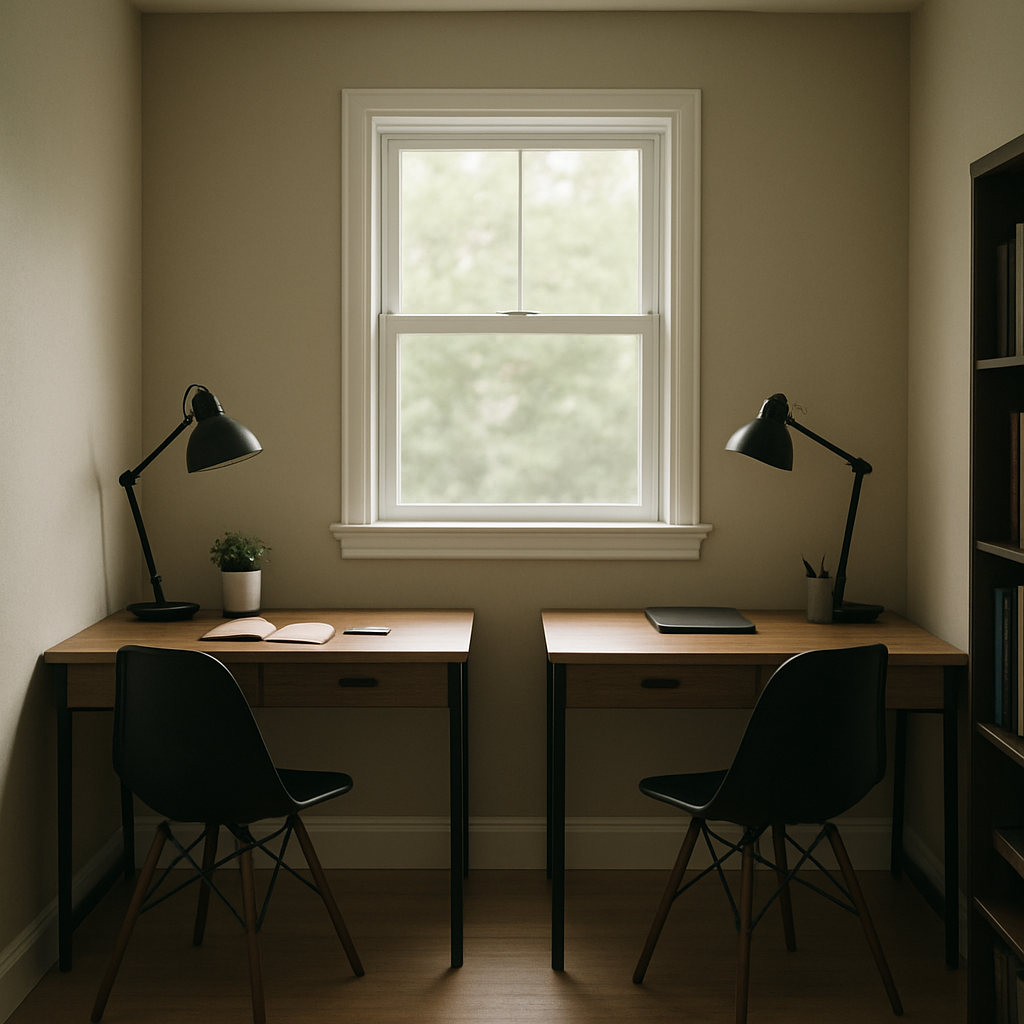
Remote and hybrid work has created a domestic puzzle that furniture catalogues rarely address: two people, one spare room, and eight hours a day of overlapping video calls. Sharing a home office with a partner or flatmate is a different design problem from building a solo setup — it involves acoustics, sightlines, scheduling and diplomacy as much as desks and chairs. Done carelessly, it breeds daily friction. Done well, a shared workspace can be more pleasant than working alone. Here is what actually works.
Layout: The Decision Everything Else Depends On
The arrangement of two desks in one room determines most of what follows, and there are really four options.
Back-to-back, with each person facing an opposite wall, is the most popular for good reason: neither screen is in the other's webcam, and you cannot make distracting eye contact. The downside is that both of you have your backs exposed to the room, which some people find subtly unsettling.
Side-by-side along one wall feels sociable and suits couples who like working near each other, but every glance sideways lands on your neighbour's screen, and one person's webcam often captures the other.
L-shaped, in adjacent corners, is the strong compromise — near each other but angled apart, with reasonably clean camera backgrounds for both.
Face-to-face with a divider — a shelf, monitors back to back, or a proper partition — mimics a small studio and works surprisingly well in narrow rooms.
Before committing, sit in each proposed position and check three things: what your webcam sees, what light falls on your face, and whether either chair blocks the door or a walkway. Ten minutes of testing prevents months of low-grade irritation.
The Call Collision Problem
Simultaneous video calls are the defining stress test of a shared office. Two voices in one room means each microphone picks up both conversations, and each person half-listens to a meeting that is not theirs.
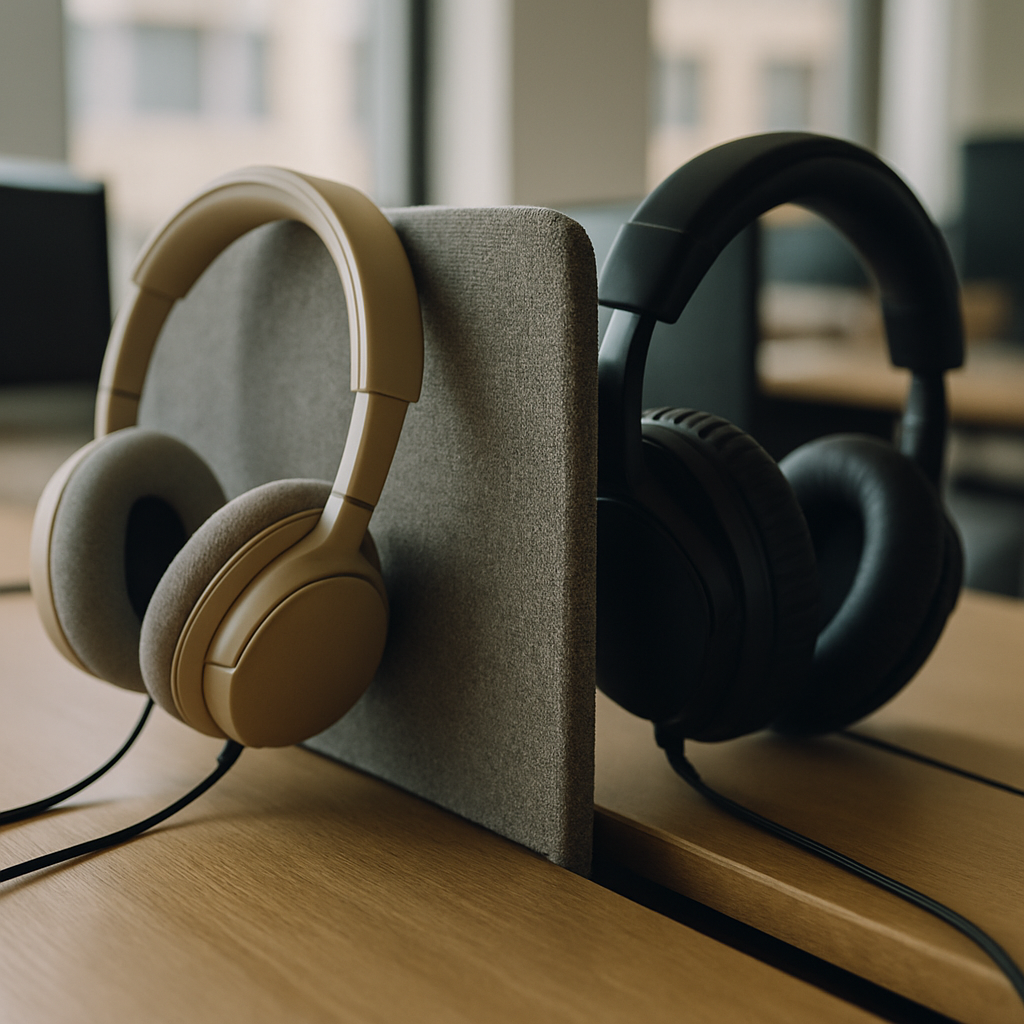
Technology solves more of this than people expect. Headsets with decent noise-rejecting microphones — the kind that isolate the voice directly in front of them — keep most of your partner's conversation out of your calls, and modern software noise suppression removes much of the rest. Both people wearing headphones also eliminates the worst offender: speaker audio bleeding into the other microphone.
The remainder is logistics. A shared calendar glance each morning flags the collision points; the person with the less formal call can relocate for an hour, and a small side table elsewhere in the home designated as the overflow spot removes the daily negotiation. Some couples adopt a simple visual signal — headphones on means in a meeting, do not speak — that saves the awkward mid-call wave.
One Room, Two Personalities
Shared does not need to mean identical, and forcing matching setups on people with different tastes and different bodies is a mistake. Chairs especially must be chosen per person; a chair fitted to one body can be actively harmful to another. The same goes for desk height, monitor arrangement and keyboard preferences.
Where harmony matters is the shell of the room: wall colour, flooring, curtains, lighting and shelving read as one space, so decide those jointly. Within each desk zone, let each person express their own style. A room with a coherent background and two distinct desk personalities looks intentional. Two clashing colour schemes fighting over one small room does not.
Storage benefits from ruthless clarity: separate drawers, separate shelves, and a firm rule that paperwork and clutter do not migrate across the border. Most shared-office friction is really territory friction in disguise.
Sharing Resources Without Sharing Frustration
Some equipment sensibly serves both people — a printer, a paper shredder, a label maker, spare chargers. Place these in neutral territory, reachable from both desks or on a shared shelf, so nobody has to hover in the other's space mid-call.
Climate and light are the subtler shared resources. Two people rarely run at the same temperature, so seat the perpetually cold person away from the window and keep a desk fan and a throw blanket in the room as diplomatic instruments. For lighting, individual desk lamps let each person tune their own zone, while overhead light stays a joint decision.
The Human Settlement
Every practical measure above works better with one soft agreement underneath: a short conversation about norms. When are interruptions fine and when are they not? Is music aloud acceptable? Who takes the room when both have important calls at once? Settling these once, explicitly, beats renegotiating them through sighs and headphone gestures for months.
A shared workspace will never offer the monastic control of a private office. What it can offer is something else: companionship through the working day, someone to share coffee runs and small victories with, and a room that two people built to work for both of them. With the right layout, good headsets and clear borders, two desks in one room is not a compromise. It is just a different kind of good setup.